Report 4The roofQueensland’s possum page, clue by clue
Rat or possum in the roof?
Listen first: rats, at no more than a few hundred grams, tend to scurry, while a brushtail possum of up to five kilograms thumps about in the roof even when it walks slowly. Noises inside a wall cavity are most likely a rat. Those are the Queensland Government’s words on its possum page, which also warns that possums are sometimes blamed for what introduced rats have done.
General information. The clues on this page are from the Queensland Government’s page about possums, listed at the foot of this page with the other sources.
Six clues, side by side
The possum page works through three questions: what noise it makes, whether it has made a nest, and what it has left behind. Here are its answers for a rat and for the brushtail possum, the one that moves into ceilings.
| Clue | A rat | A brushtail possum |
|---|---|---|
| Weight | a few hundred g | up to 5 kg |
| Walking | Scurries. | Thumps about, even walking slowly. |
| Gnawing | Gnaws loudly on anything it finds to keep its growing front teeth sharp, and may even carry old bones into roof and wall cavities to do it. | Not mentioned on the page. |
| Calls | A squeal when fighting or mating, higher pitched than a possum’s. | Squeals too; a resident male also gives a loud, throaty call to warn other males. |
| Nest | Usually a small nest in a sheltered spot, often on the ground, lined with shredded paper, rags or dry plant material. | May make a nest of leaves in the ceiling, or do without one and bed down on the insulation. |
| Droppings | Black pellets about 7 mm long, often scattered around a sheltered feeding or nest site. | Black pellets of more than 15 mm, more likely found under a tree where it has been feeding. |
The ringtail possum, the other common species, leaves droppings somewhere between the two in size, and nests in a ball of sticks called a drey, woven together in the branches of a tree. One more sign belongs to the brushtail: a brown stain that suddenly appears on the ceiling, where it is using the roof space as a toilet.
The rat that lives in roofs
The Australian Museum says the black rat was probably introduced to Sydney with the First Fleet. It prefers to live in roofs, cavity walls and trees, or in scrapes and burrows around farms, and it is a very agile climber that lives closely with people. It is mostly active at night but is often seen by day. It breeds quickly: a female may raise up to six litters a year, each of about five to ten young.
Despite the name, the museum says, the black rat is usually brown or grey. Its tail is much longer than its head and body, and its large thin ears reach the middle of the eye when bent forward. In a roof, Queensland Health’s page for food businesses notes, rats and mice may nest and damage cables and pipes by gnawing.
Why a possum wants the roof at all
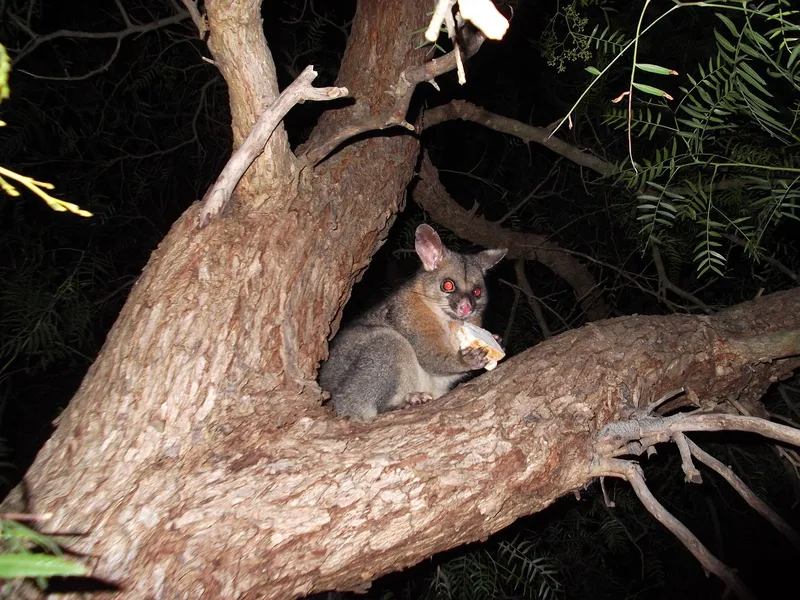
Den sites limit how many possums an area can hold, the possum page explains. With few mature trees with hollow branches left in the suburbs, brushtail possums have adapted by moving into the ceilings of houses. A possum without a den will not survive, and if one is removed from an area, another will soon fill its den.
Sealing the way in matters for the same reason: having a possum removed is not a quick fix, the page says, because if the empty den is not sealed off it will be reoccupied.
Finding where it gets in
“If a brushtail possum can get its head into a space then it can probably squeeze the rest of its body in too,” the page says, and older homes often have openings into the roof big enough for one. The Queensland Government’s possum page sets out how to find the opening and close it with the possum outside.
If the clues point to rats
Rat and mouse urine may carry the bacteria that cause leptospirosis, NSW Health says, and its clean-up steps include gloves. The clean-up report gives NSW Health’s steps in full, and the mouse plague report covers who in a household is most exposed.